
Simple systems that keep me fed, fueled, and consistent — without spending hours in the kitchen.
Bulk meal prep has never worked for me. I don’t cook five identical meals or spend half a Sunday in the kitchen. Instead, I use a simple system that makes eating well easy, especially on busy days. The beauty of this is that when you are feeling creative, you still have everything you need to mix things up.
Here’s exactly how I do it.
Most of my meals take less than 10 minutes to put together and require little to no cleanup.
My system works because my staples are always ready to grab, and everything mixes and matches. No recipes, no complicated prep — just simple combinations.
Proteins (Quick + Easy)
- eggs
- deli turkey slices
- frozen pre-cooked shrimp
- rotisserie chicken (no effort)
- chicken breast (to boil and shred)
- chicken bone broth
- large tub of plain Greek yogurt (can be used for sweet or savory add-ons)
Veggies (Minimal Prep)
- frozen or fresh steam-bag vegetables
- premade salad bag
Carbs (Fast + Flexible)
- 90-second rice
- steam bag of sweet potato
- steam bag of mini potato
- tortillas
- oatmeal
- rice cakes
Fruit (Grab-and-Go)
- bananas
- apples
- berries
- watermelon or pre-cut fruit
- applesauce pouches
Healthy Fats
- natural peanut butter
- avocado
- chia seeds
- almonds
- cashews
Add-Ons / Flavor Boosters
- shredded cheese
- raw honey
- peri-peri sauce
- balsamic vinegar
- lemon
- low-calorie dressing
- make your own: olive oil, lemon, salt, pepper – I promise it tastes better than it sounds!
The absolute easiest week starts with rotisserie chicken or a bag of shredded chicken breast.
If I cannot get a precooked chicken, I halve a couple of large chicken breasts and boil them in bone broth, topped off with a little water.
After about 10-15 minutes, I take them out, set aside the broth, and let the chicken cook down.
I shred the chicken with my hands and put them into a large storage container, then pour the broth over them for storage. This makes helps it to stay moist and flavorful.
I do add additional seasoning, but I am very mindful about how much salt goes into anything. My usual go-tos are Greek seasoning, ginger, turmeric, garlic, onion, sea salt.
I also add some fruit as a side to most meals to feel more satiated. It helps me to avoid seeking junk food following meals.
All of these take just minutes.
One protein becomes:
- Rice Bowl
- chicken + broccoli + yogurt
- Simple Plate
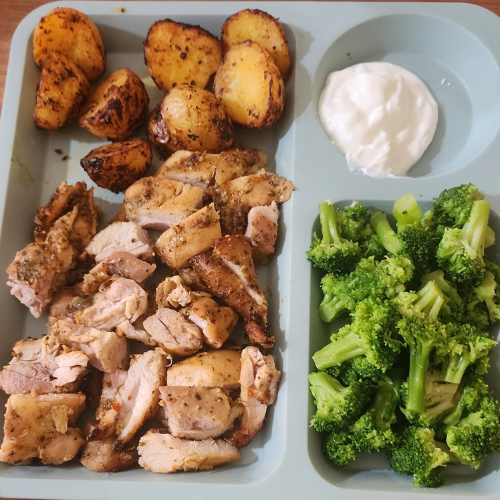
- chicken + broccoli + sweet potato
- Tacos
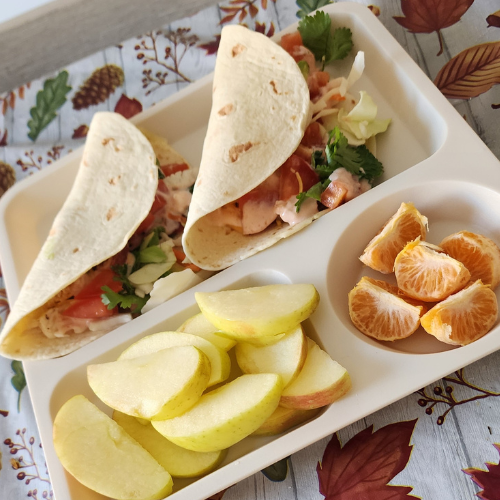
- chicken + black beans + tortilla
- chicken + eggs + cheese + black beans + tortilla
- Greek yogurt as a “sour cream”
- Chicken Salad
- greens + chicken + simple dressing
- greens + chicken + simple dressing
- Bone broth soup (add some veggies and rice noodles or whatever feels right to you)
When I get tired of chicken, I switch to:
- frozen shrimp (quick to thaw and reheat)
- salmon (low effort ~12 min in air fryer)
I’m always aiming to keep myself satisfied and to stop late-night snacking without feeling restrictive.
Snacks
- fruit
- nuts
- apple sauce pouch
- yogurt + fruit
- rice roll + natural peanut butter
- turkey + cheese tortilla roll up
This system works because I set up my kitchen to support it.
- Fruits and nuts stays visible on the counter
- Treats live in a cabinet I don’t open often
- Quick meals stay at eye level in the fridge and cabinet
I do track many of my meals, but I don’t force strict rules — I focus on reducing friction so I can stay consistent even when life is chaotic or my knee is acting up.
Pre-workout examples
- Small handful of almonds or cashews + apple sauce pouch
Fast, light, and easy on my stomach.
Breakfast examples
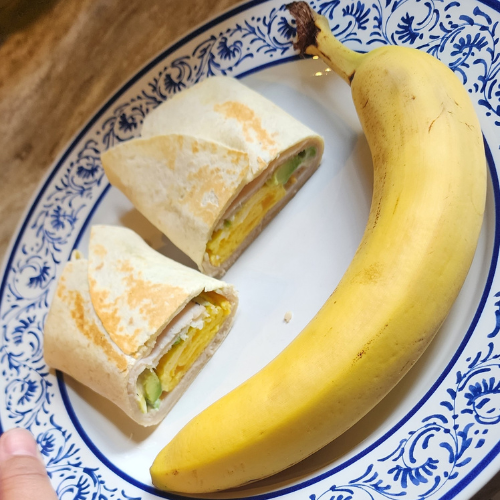
- tortilla + eggs + cheese + 2 slices of turkey
- protein oatmeal + chia seeds
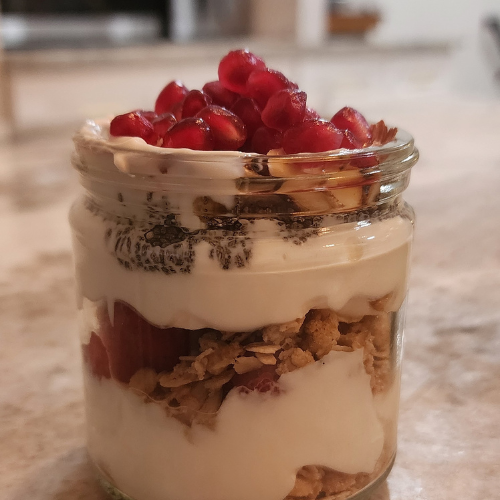
- yogurt + honey + chia seeds + fruit
Want more clarity around how much you should be eating to meet your goals?
Helpful Tool:
If you’re rebuilding your nutrition routine, the NIH Body Weight Planner is a great starting point:
https://www.niddk.nih.gov/bwp
I don’t recommend obsessing over the numbers, but it’s helpful for understanding general calorie ranges or how activity level affects energy needs.